Flat Roof vs. Pitched Roof for Commercial Buildings: Which Is Right for Your Tampa Property?
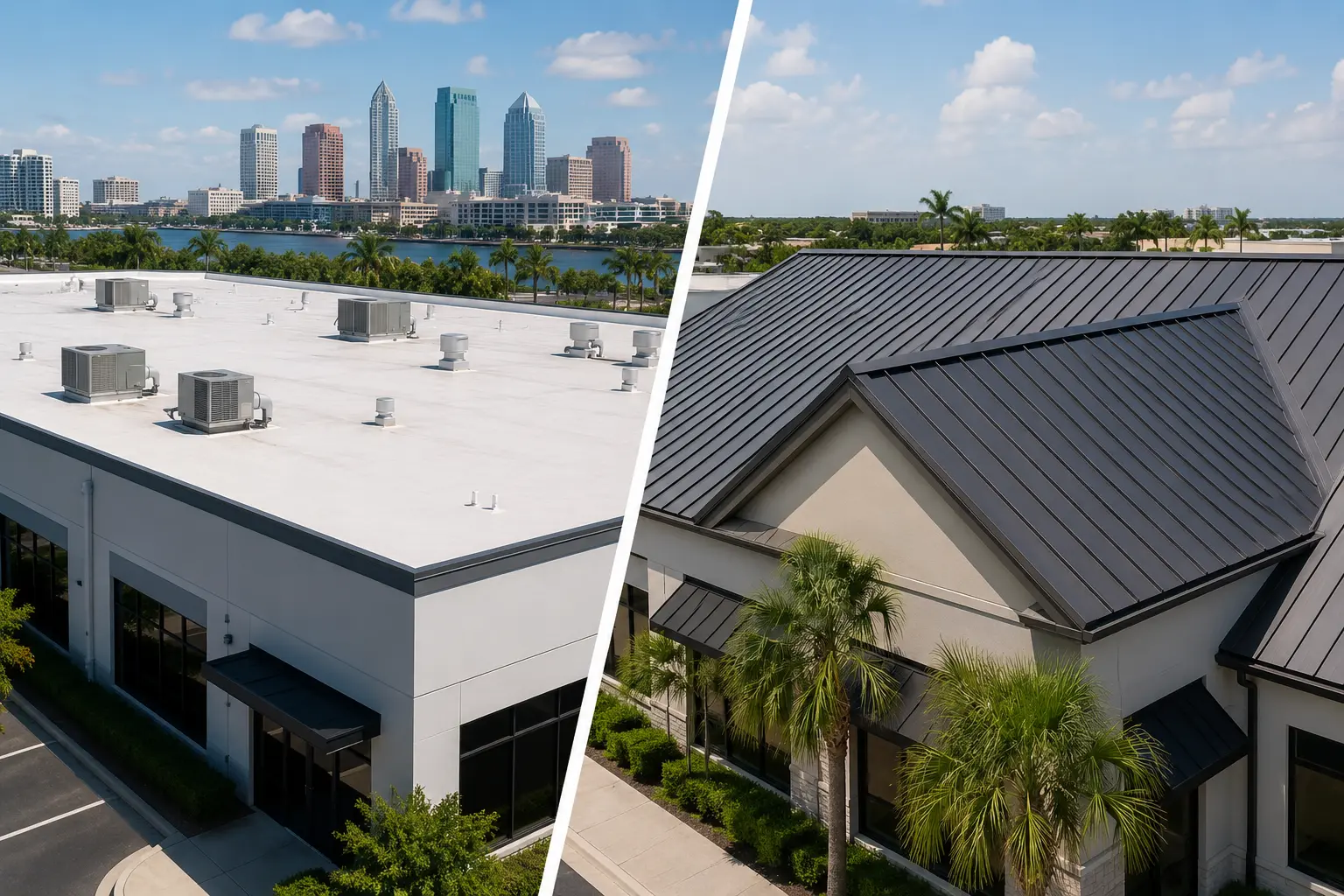
Choosing between a flat roof vs. pitched roof for commercial buildings affects your cost, lifespan, and protection against Tampa Bay’s heat, rain, and storms. We help property owners make this decision every day at Bayside Roofing.
With more than 30 years serving Tampa, Clearwater, and St. Petersburg, our family-owned team has installed and repaired both roof types on warehouses, shopping centers, and office buildings. This guide breaks down the differences in simple terms, so you can pick the right system for your building and budget.
Commercial Flat Roofs: Pros, Cons, and Common Materials
Flat commercial roofs cost less upfront and install faster than pitched roofs. They use fewer materials and simpler construction, which reduces disruption to your business during the project. A flat roof also gives you usable rooftop space for HVAC units, solar panels, or equipment, and crews can access it safely for maintenance.
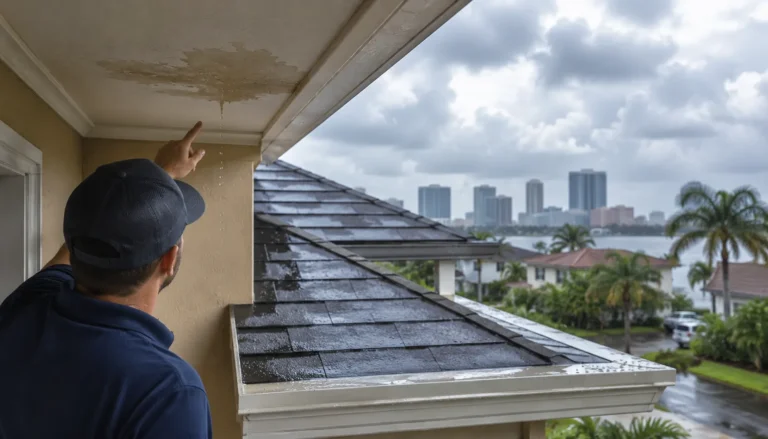
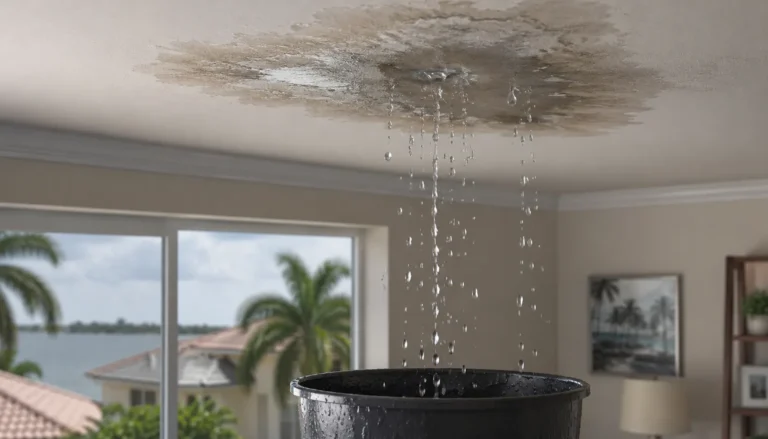
Flat roofs do have drawbacks. Poor drainage can cause water to pool, which leads to leaks and faster wear over time. Most flat roofs last about 10 to 25 years, depending on the membrane, and they need more frequent inspections of seams, drains, and roof penetrations. They also lack the attic cavity that adds natural insulation.
Commercial Pitched Roofs: Pros and Cons
Pitched commercial roofs drain water well and last longer than flat roofs. The slope sheds rain quickly, which reduces ponding and leak risk. Most pitched roofs serve 20 to 50 years or more, and they need less routine maintenance over their lifespan.
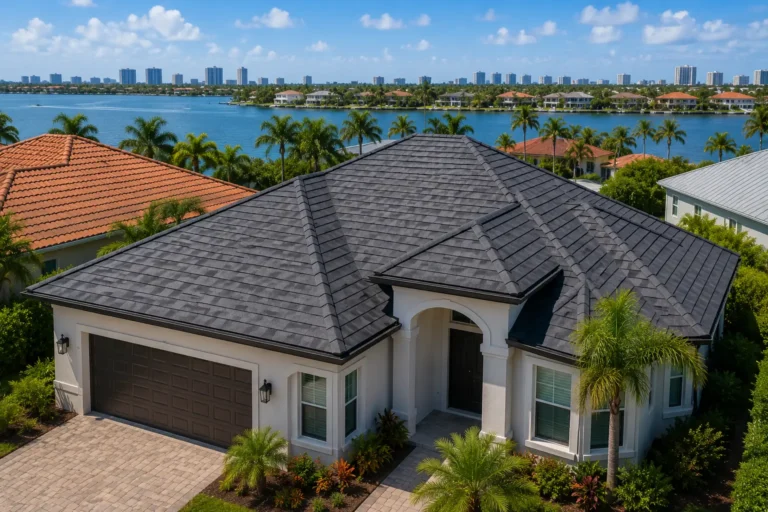
Pitched roofs also create attic or void space. This area holds insulation and mechanical systems, which improves energy efficiency. You get broader material choices too, including metal, shingles, and tile, plus a traditional look that many owners prefer.
The trade-offs are cost and complexity. A pitched roof costs more upfront and uses a more involved structure. The added weight may require extra structural support. Service work is harder and riskier on a slope, so professional access is usually required, and you lose the usable rooftop floor area that a flat roof provides.
Cost, Maintenance, and Energy Efficiency Compared
Flat roofs win on upfront cost, but pitched roofs often cost less over time. The lower material and labor cost of a flat roof makes it the cheaper starting point. A pitched roof carries a higher initial price, yet its longer life and reduced repairs can make it more economical across decades.
Maintenance differs by design. Flat roofs are easier to reach, but they need more frequent inspections and repairs to catch issues early. Pitched roofs need less routine work, though their height and slope make access harder and require trained crews.
Energy performance usually favors pitched roofs. Their attic insulation outperforms most flat roofs in thermal efficiency. A white TPO membrane narrows that gap on flat roofs through high solar reflectance, which matters in hot climates like ours.
Which Roof Is Best for Tampa Bay’s Climate?
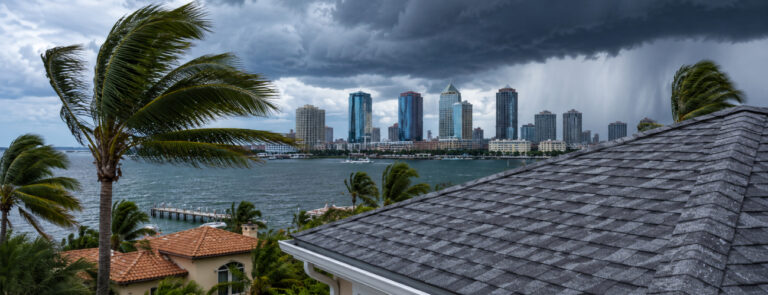
Tampa Bay brings intense sun, high heat, heavy rain, and hurricanes, so your roof choice must handle all four. Both flat and pitched systems can perform well here when they are engineered correctly for our coastal conditions.
Flat roofs work well on large commercial buildings and support centralized rooftop HVAC and solar. With wind-rated fastening, tapered insulation for drainage, and a reflective TPO or PVC membrane, a flat roof holds up to Tampa’s heat and storms. Pitched roofs offer superior drainage and longer service life, which helps during frequent thunderstorms and tropical downpours. A properly built metal or tile pitched roof also resists high winds.
For large, low-rise facilities like shopping centers, warehouses, and offices, a well-designed flat membrane roof is usually the most practical and economical choice. For smaller, highly visible, or wind-exposed buildings, a pitched metal roof often delivers better long-term durability.
How to Choose the Right Commercial Roofing Contractor in Tampa
Pick a commercial roofing Tampa contractor with proper licensing, local experience, and clear warranties. The right partner protects your investment and helps you avoid costly mistakes on either roof type.
Start with credentials. Confirm Florida licensing, insurance, workers’ comp, and liability coverage. Bayside Roofing is fully licensed (Roofing #CCC1328720, Building #CBC1253998), bonded, insured, and holds an A+ BBB rating. As certified CertainTeed Master Craftsmen, we install TPO, EPDM, PVC, metal, and modified bitumen systems backed by industry-leading warranties.
Ask for local references, photos, and case studies from similar Tampa Bay buildings. Request a detailed written proposal that lists scope, materials, fastening method, insulation R-value, flashing details, code compliance, schedule, and total cost. Review warranty terms for wind and ponding coverage, then ask about maintenance programs with semi-annual inspections and storm-response service. Our owners personally oversee every project, and a dedicated project manager keeps you informed from start to finish.
Make the Right Roofing Call for Your Tampa Property
Flat roofs suit large commercial footprints that need rooftop equipment and a lower upfront cost, but they require strong drainage design, reflective membranes, and steady maintenance in our wet, hot climate. Pitched roofs cost more at first, yet they offer longer life, better drainage, and stronger insulation.
The best choice depends on your building, budget, and goals. Our team helps you weigh both options for your property. Contact Bayside Roofing for a free estimate.