Does Homeowners Insurance Cover Roof Leaks in Florida?
Does homeowners insurance cover roof leaks in Florida? The answer depends on what caused the leak, when it happened, and the current condition of your roof. At Bayside Roofing Professionals, we’ve spent more than 30 years helping homeowners across the Tampa Bay area sort through these questions after storms roll through.
Florida’s insurance landscape has shifted significantly in recent years. New reforms, tighter claim deadlines, and changing policy language all affect whether your roof leak gets covered or denied. We’ve put together this guide based on what we see every day working with homeowners, adjusters, and insurance companies, so you know exactly where you stand before, during, and after a claim.
What Florida Homeowners Insurance Typically Covers for Roof Leaks
Florida homeowners insurance generally covers roof leaks caused by sudden and accidental damage from a covered peril. It does not cover leaks from gradual wear or aging materials.
Covered events typically include:
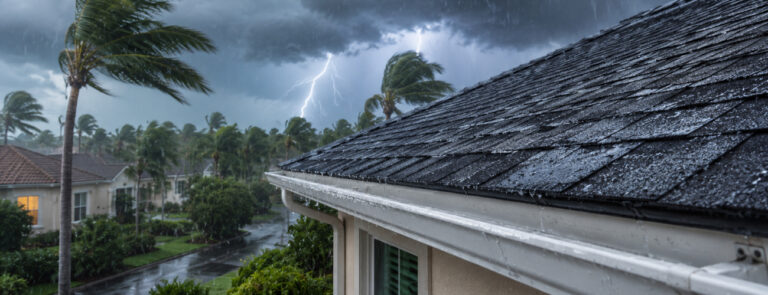
- Windstorms and hurricanes that lift shingles, break tiles, or puncture roofing materials, allowing rain to enter
- Hail damage that cracks or bruises shingles and tiles
- Fallen trees or branches, tornadoes, and lightning strikes that damage the roof structure
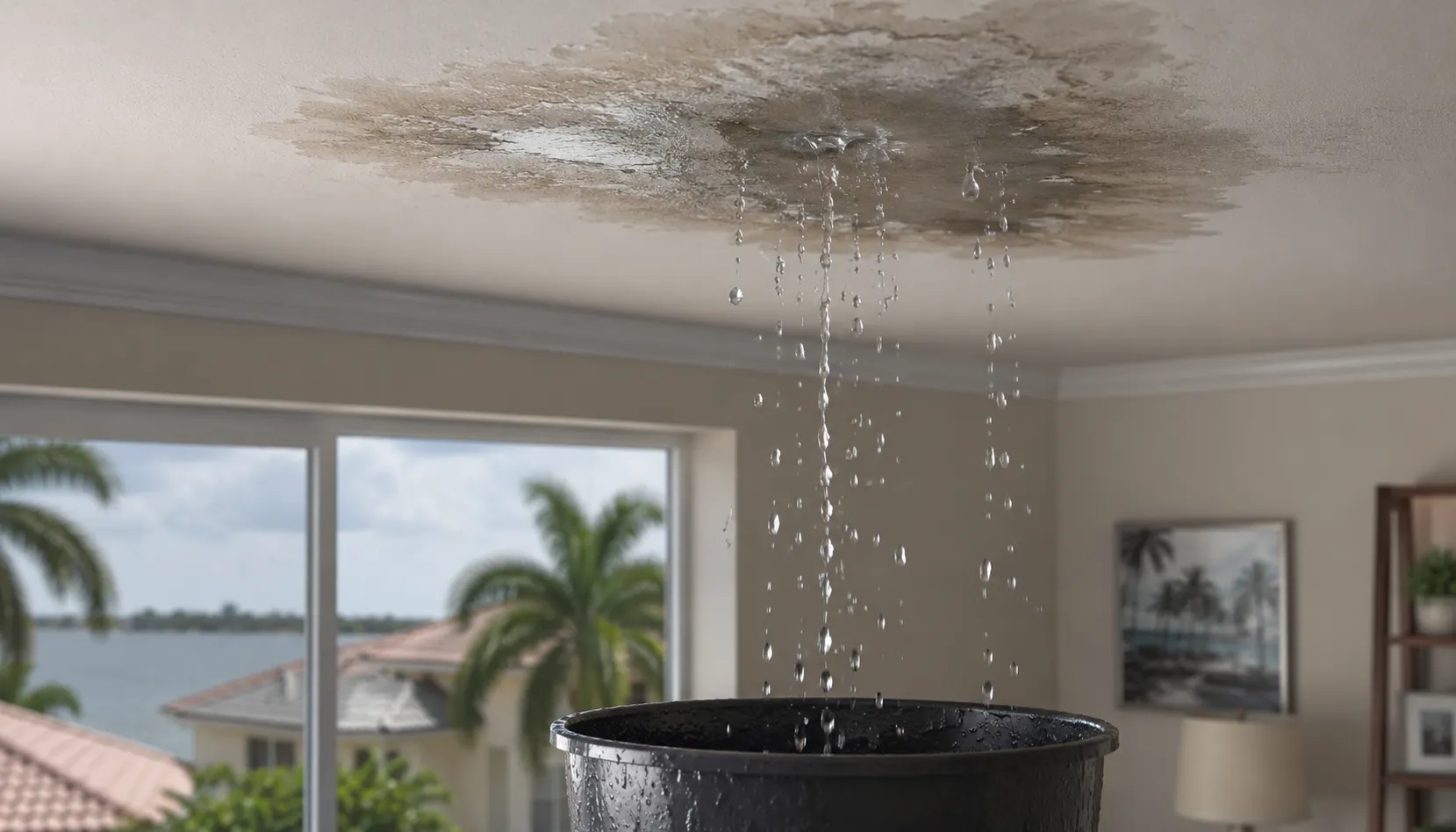
When your insurer approves the claim, the policy usually pays for roof repair or replacement (subject to age-related rules) and resulting interior water damage. That includes ceilings, drywall, insulation, flooring, and sometimes personal property.
The key phrase to remember is “sudden and accidental.” If a hurricane tears off ridge cap shingles and rain soaks your attic the same night, that’s a covered event. If your 20-year-old shingles have been slowly deteriorating and water finally seeps through, that’s a different story entirely.
Roof Leak Causes That Are Not Covered by Your Policy
Understanding what your homeowners insurance won’t cover for roof leaks is just as important as knowing what it will. Most denied claims fall into a few common categories.
Aging and normal wear. Shingles, flashing, and underlayment break down over time. Insurers classify this deterioration as the homeowner’s maintenance responsibility, not an insurable event.
Deferred maintenance. If you knew about a problem, a cracked boot vent, missing flashing, or curling shingles, and didn’t fix it, your insurer can deny the claim based on neglect.
Gradual or long-term leaks. A leak that’s been dripping for weeks or months, causing rot and mold, typically falls outside coverage. Insurers expect homeowners to catch and address problems promptly.
Defective installation or construction defects. If a previous roofer installed materials incorrectly and the roof fails as a result, your homeowners policy usually excludes that damage.
Older roof limitations. Many Florida policies now pay only actual cash value (depreciated value) on roofs over a certain age, rather than full replacement cost. Some policies won’t cover roofs past 15 or 20 years at all. Check your declarations page so you aren’t caught off guard.
How Florida’s Insurance Reforms and Deadlines Affect Your Roof Leak Claim
Florida has enacted several insurance reforms in recent years that directly impact how roof leak claims are handled. If you own property in Holiday, FL or anywhere in the Tampa Bay region, these changes matter.
Shortened claim deadlines. Florida law now imposes strict notice requirements for property damage claims. Reporting a roof leak weeks or months after the event can result in a denial. Insurers can argue that the delay caused prejudice, meaning they couldn’t properly investigate the original damage.
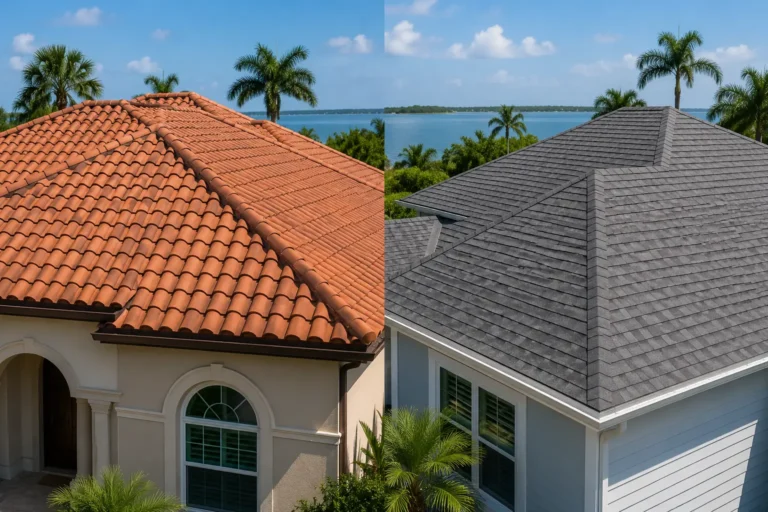
Roof replacement and matching rules. Reforms adjusted how insurers handle full roof replacement requests and disputes over matching materials. This affects whether your insurer must replace the entire roof or only the damaged section.
Assignment of benefits and attorney fee changes. Legislative changes altered the rules around assigning your insurance benefits to contractors and limited one-way attorney fee provisions. These shifts affect how claims are pursued and litigated.
Valuation changes. Policy endorsements issued after recent reforms may change how your roof is valued. Some policies moved from replacement cost to actual cash value based on roof age. We recommend reviewing your policy annually to confirm how your roof is covered.
Steps to File a Roof Leak Insurance Claim in Florida
Filing a roof leak insurance claim in Florida requires prompt action and solid documentation. Here’s the process we recommend to our customers.
1. Stop the damage immediately. Tarp or temporarily patch the affected area to prevent further water intrusion. Your policy requires you to mitigate ongoing damage, and failing to do so can reduce your payout. Save receipts for any emergency materials or services.
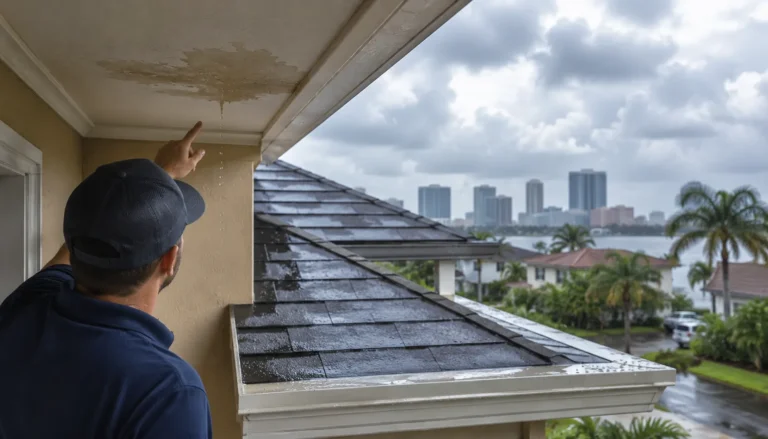
2. Document everything. Take clear photos and videos of both the roof damage and any interior damage, water stains, wet insulation, damaged flooring. Note the date, time, and weather conditions.
3. Review your policy. Before calling your insurer, check your covered perils, exclusions, roof age limitations, and deductible amounts (especially hurricane and wind deductibles).
4. Notify your insurer quickly. Report the claim as soon as possible with a clear description of the event and the resulting damage. Delays can jeopardize your claim under current Florida law.
5. Schedule a professional roof inspection. A licensed Florida roofer can document whether the damage is storm-related or wear-related and prepare a detailed repair estimate.
6. Be present for the adjuster visit. Have your roofer or contractor there if possible. Provide all documentation, photos, and estimates.
7. Track everything. Keep copies of all communications, adjuster reports, and payment breakdowns including depreciation, deductibles, and any recoverable holdback amounts.
Understanding Hurricane Deductibles and Out-of-Pocket Costs
Florida homeowners insurance policies almost always carry a separate hurricane deductible that applies when damage results from a named hurricane. This deductible is usually a percentage of your dwelling coverage (Coverage A), not a flat dollar amount.
For example, if your home is insured for $350,000 and your hurricane deductible is 2%, you’d pay $7,000 out of pocket before insurance kicks in. At 5%, that jumps to $17,500. Many homeowners don’t realize this until they file a claim.
For non-hurricane wind or hail events, your standard all-perils deductible or a separate wind/hail deductible applies. This is typically a flat amount, $1,000 to $5,000 depending on your policy.
Your total out-of-pocket cost includes the applicable deductible plus any non-covered portions. That might mean wear-and-tear repairs the insurer excludes, code upgrade costs if your policy doesn’t include ordinance and law coverage, or depreciation withheld on an actual cash value payout. We always encourage homeowners to know their deductible amounts before storm season starts.
What to Do If Your Roof Leak Claim Is Denied or Underpaid
A denied or underpaid roof leak claim doesn’t have to be the final answer. There are concrete steps you can take.
Request a written explanation. Your insurer must provide the specific policy language and cause-of-loss determination behind their decision. Read it carefully, sometimes denials hinge on a single adjuster’s interpretation.
Get an independent inspection. A licensed roofer or structural engineer can document storm-damage patterns that differ from normal wear. At Bayside Roofing, we frequently provide detailed reports with photos and code citations that contradict initial adjuster findings.
Submit additional evidence. Weather reports, photos taken immediately after the event, and prior maintenance records can strengthen your case. The more documentation you have, the harder it is for an insurer to justify a low payout.
Consult a professional. A Florida property insurance attorney or licensed public adjuster experienced in roof leak disputes can review your claim and advise on next steps. Some situations warrant a supplemental claim, a civil remedy notice, or further legal action.
Be aware of deadlines. Florida law and your policy both impose time limits on disputing claim decisions. Don’t wait.
When to Call a Professional Roofer Before and After Filing a Claim
Before Filing Your Claim
If water is actively entering your home, especially if you see sagging ceilings or water near electrical fixtures, call a professional roofer and, if necessary, emergency services right away. Safety comes first.
A qualified roofer can tarp or stabilize the roof to prevent further damage, which your insurance policy requires. They can also assess whether the damage appears storm-related or wear-related, helping you decide if filing a claim makes sense.
After Filing Your Claim
Have your roofer present during the insurer’s inspection. They can explain their findings, point out damage the adjuster might miss, and reference current building code requirements that affect repair scope.
A roofer’s detailed written estimate, complete with photos, measurements, and code citations, is often the strongest tool for supporting your claim amount. For disputed or partially approved claims, this documentation is essential for negotiating supplements or challenging underpayment.
At Bayside Roofing Professionals, we work alongside homeowners throughout the insurance process. As certified CertainTeed Master Craftsmen with Florida licenses (Roofing #CCC1328720, Building #CBC1253998), we provide the inspection reports and repair estimates that insurance companies and adjusters take seriously. If you’re dealing with a roof leak in Holiday or anywhere across the Tampa Bay area, contact us for a free estimate and honest assessment.